Submission
Management
Project Details
As form volumes scale, managing the resulting submissions becomes a critical workflow. This project redesigned the submission management experience in HubSpot, giving users better tools to review, filter, and act on form submissions while reducing the noise of spam and low-quality entries.
The Challenge
Teams managing high volumes of form submissions faced compounding issues:
- Spam submissions cluttered the inbox, making it difficult to identify genuine leads and wasting time on manual review.
- There was limited ability to filter, sort, or batch-process submissions, forcing users into one-at-a-time workflows.
- Submission data quality was inconsistent, with no clear way to flag incomplete or suspicious entries before they entered the CRM.
- Teams lacked visibility into submission trends, making it hard to diagnose form performance or identify issues early.
Approach
The design work balanced operational efficiency with data integrity:
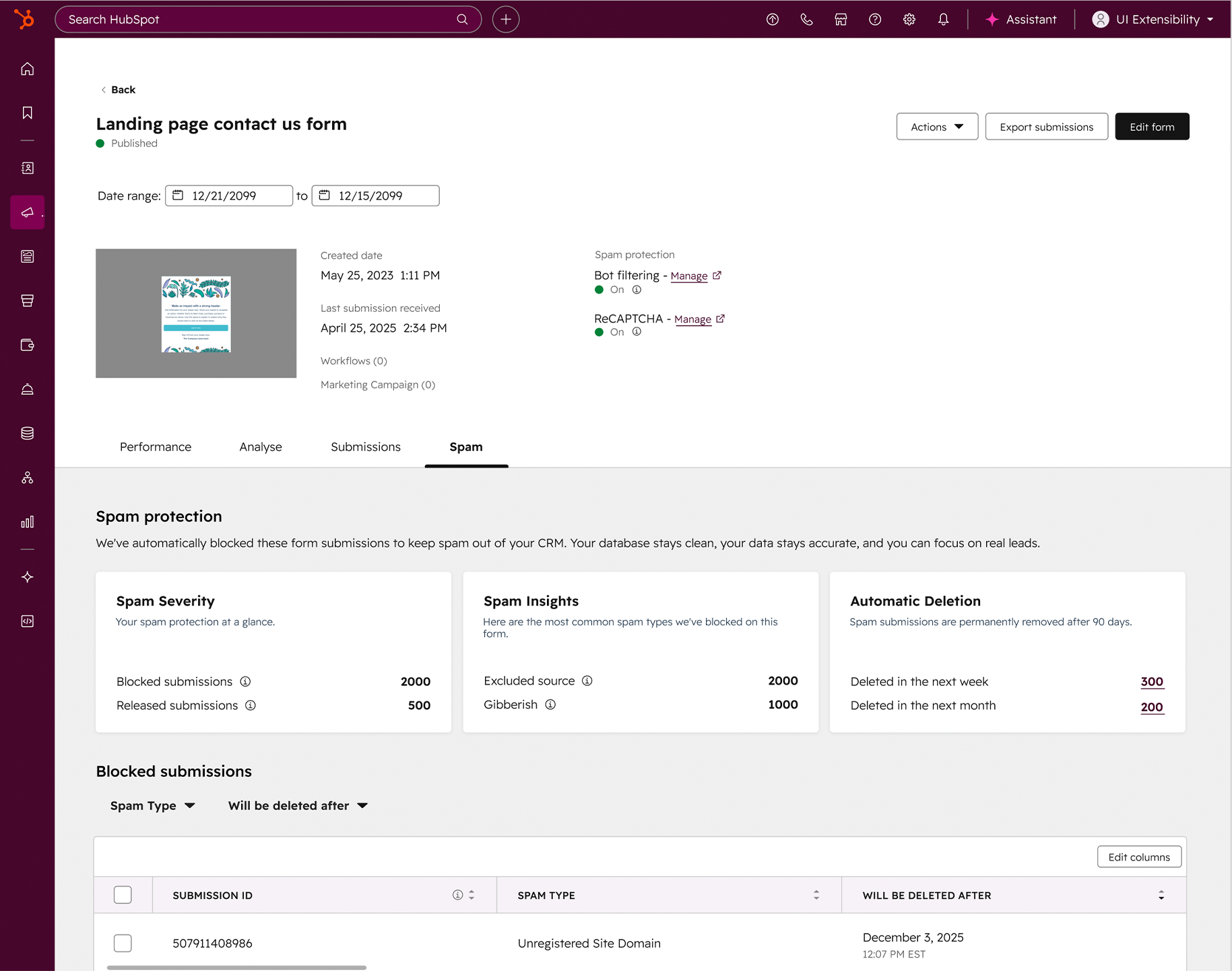
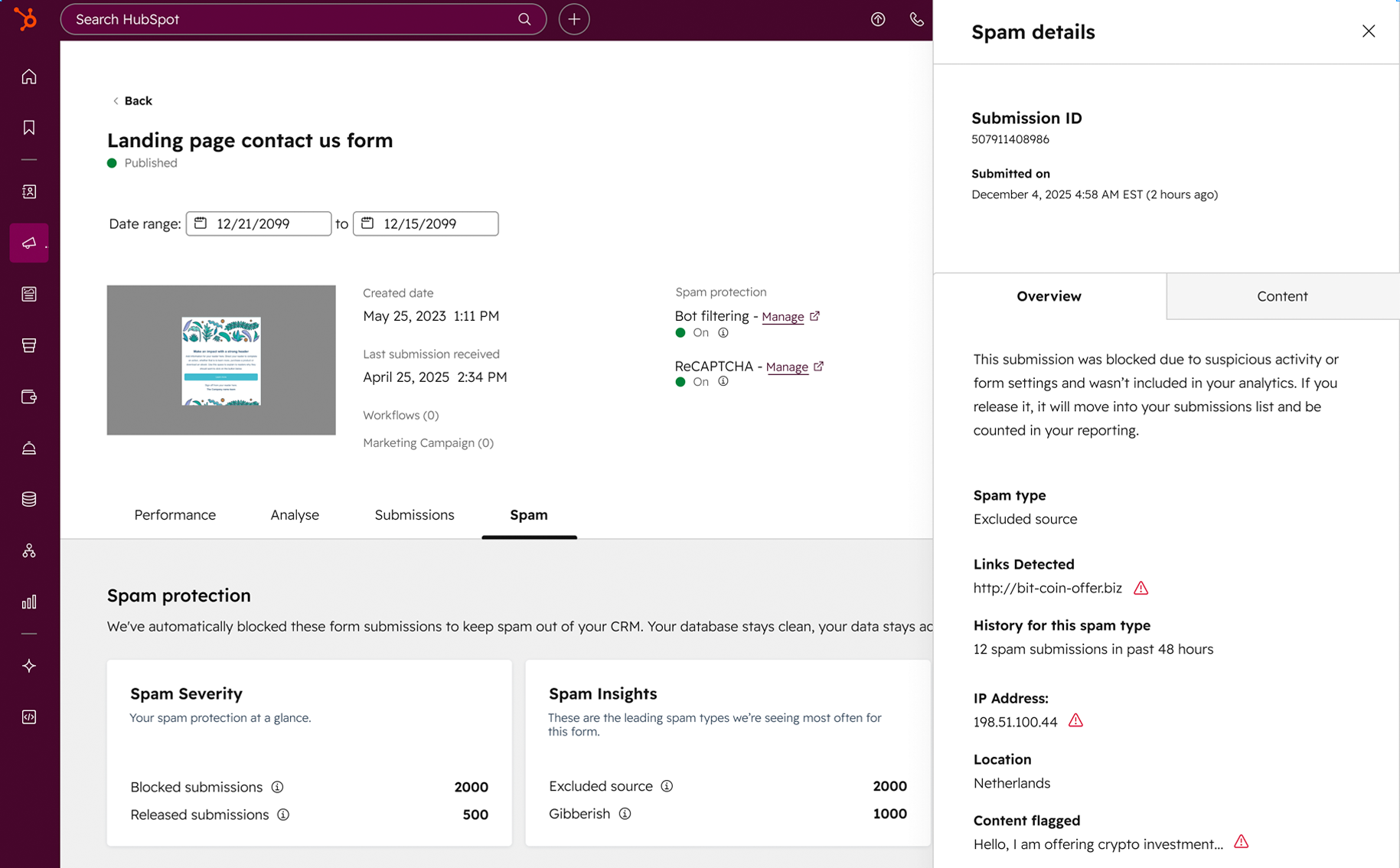
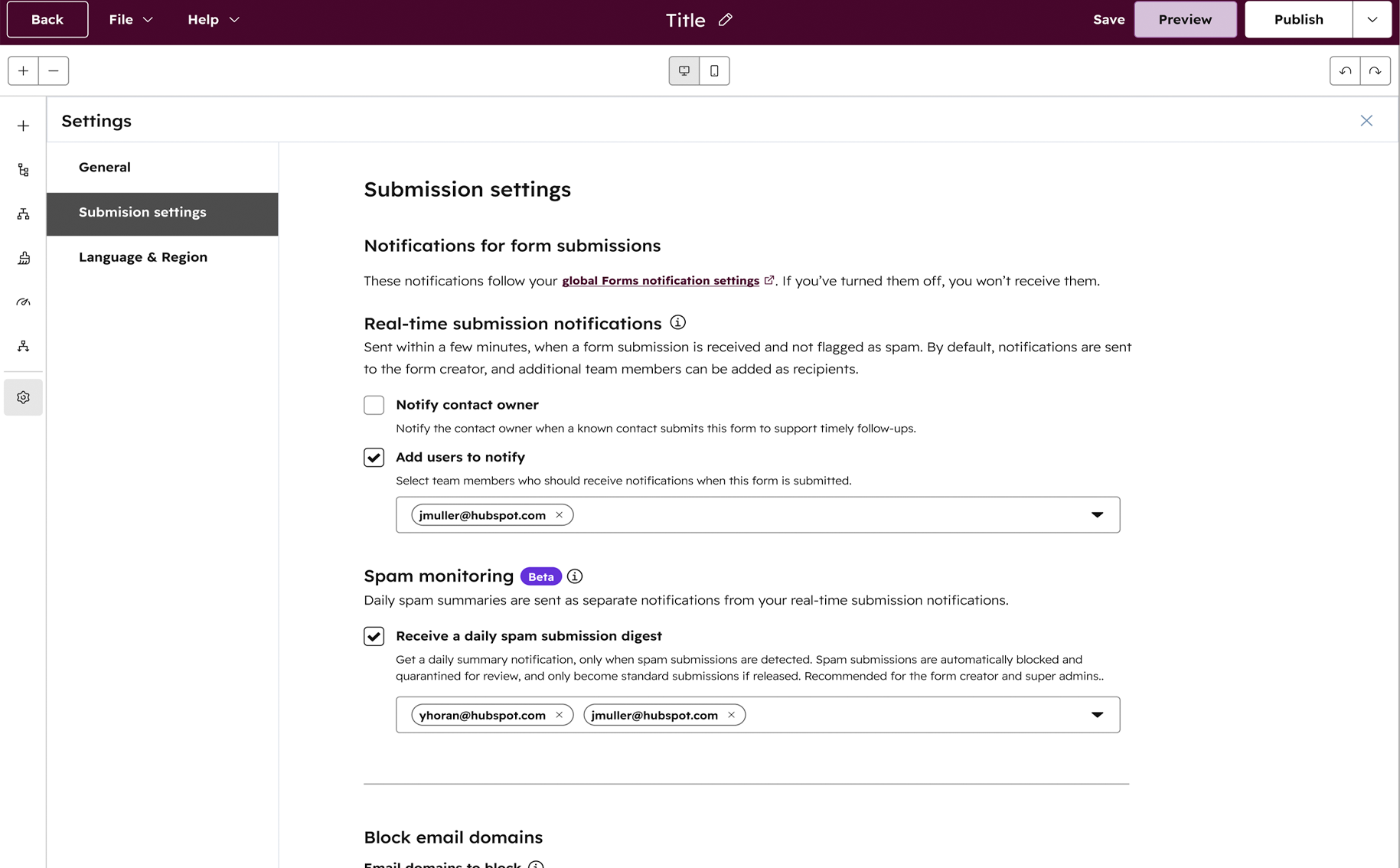
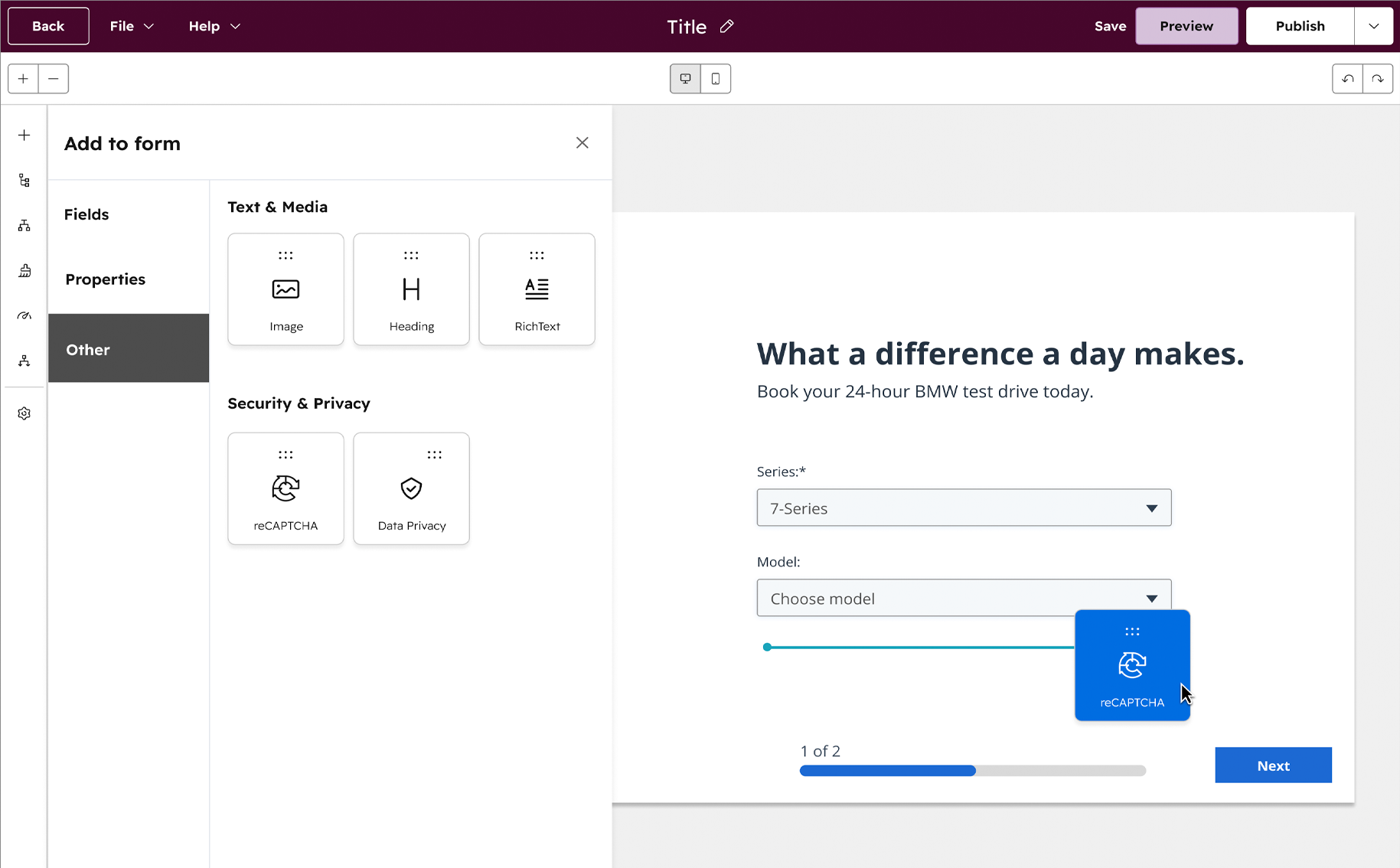
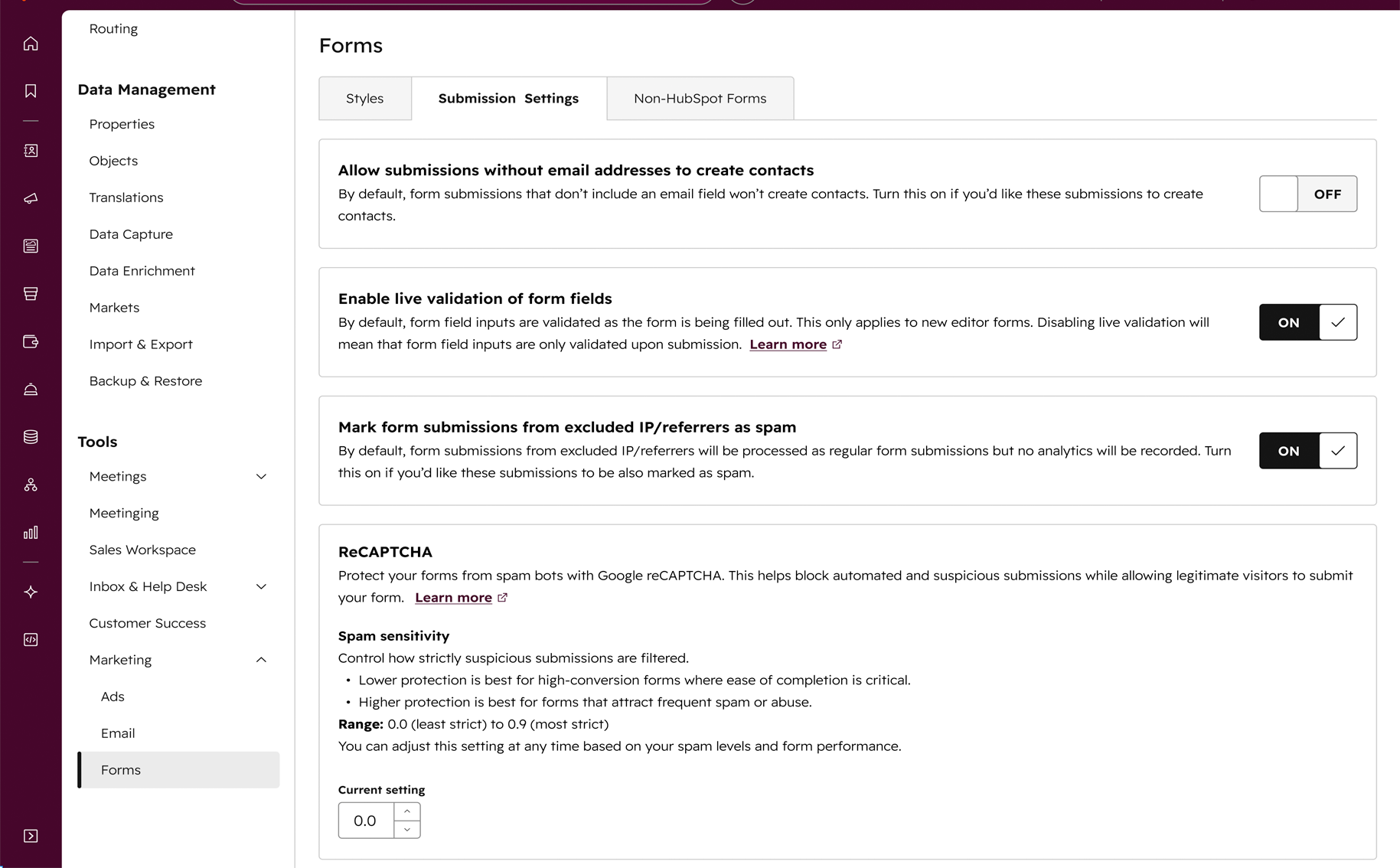
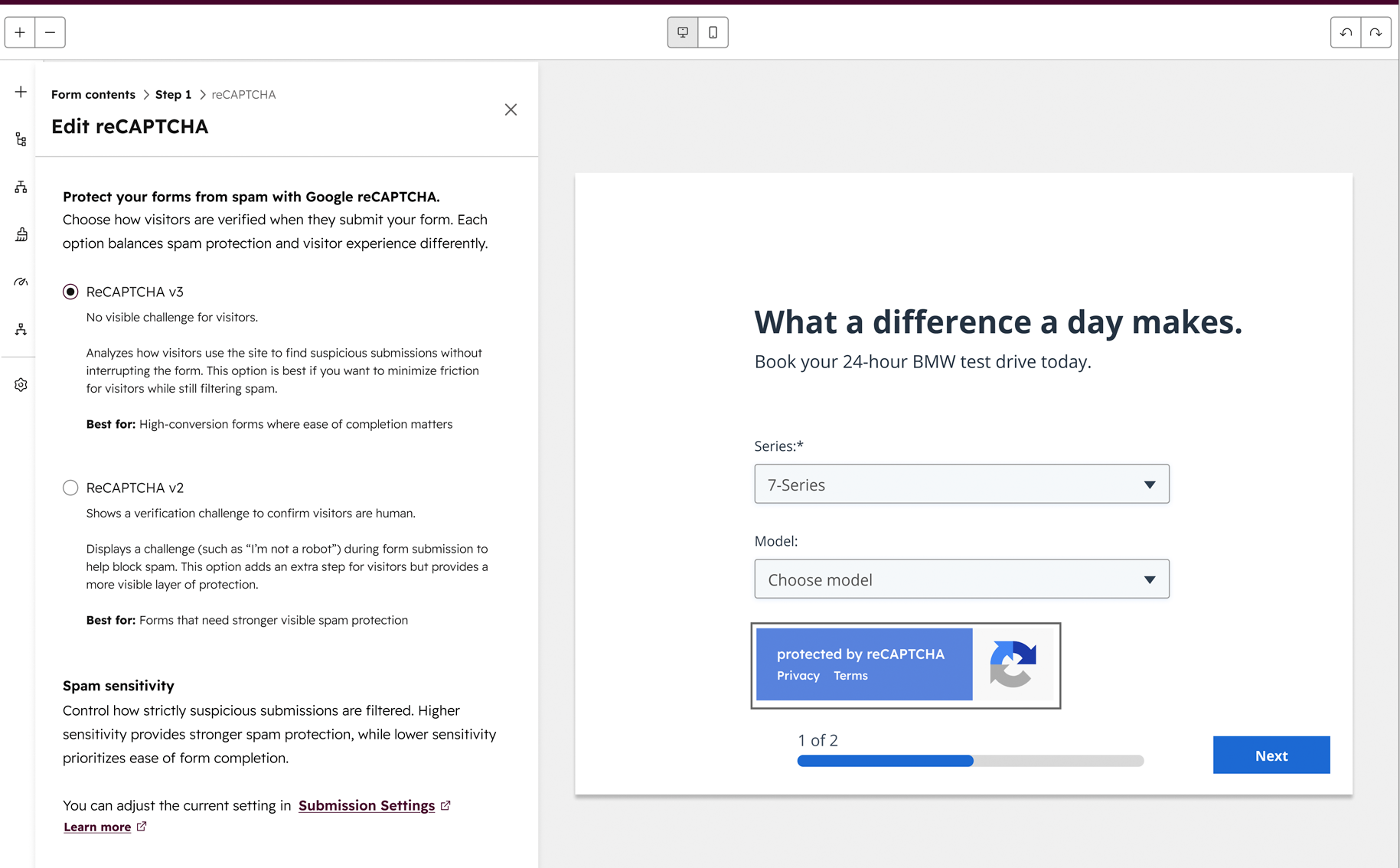
- Spam filtering & scoring: Designed a layered system that combined automated detection with user-defined rules, giving teams confidence that legitimate submissions wouldn't be lost while spam was surfaced and quarantined.
- Submission review interface: Redesigned the review experience to support bulk actions, inline editing, and status tracking—transforming a serial, click-heavy process into a streamlined workflow.
- Data quality indicators: Introduced visual signals for incomplete, duplicate, or flagged submissions so users could quickly triage without opening each entry individually.
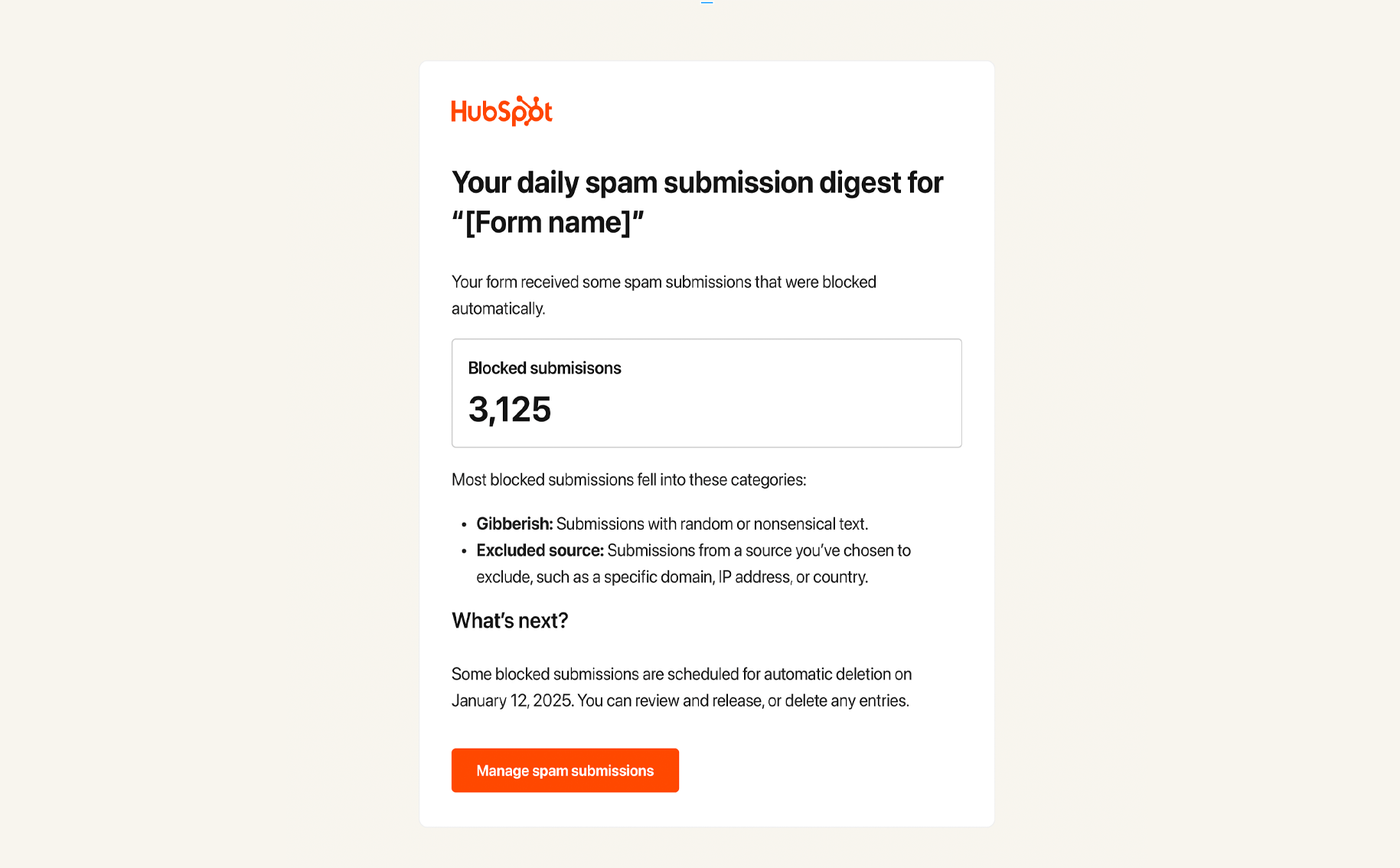
- Analytics & monitoring: Added submission trend views and anomaly alerts so teams could spot issues—sudden spam spikes, drop-offs in completion rates—before they became larger problems.
Design Principles
Signal Over Noise
Every design decision prioritised surfacing the submissions that matter. Spam management wasn't just about blocking bad entries—it was about protecting user attention and trust in the data.
Scalable Workflows
The interface was designed to work equally well for a team processing 50 submissions a week and one handling thousands a day, with progressive disclosure of advanced features.
Outcomes
- Reduced the time spent on submission review and triage through bulk actions and improved filtering.
- Decreased the volume of spam reaching user inboxes with a layered detection and quarantine system.
- Improved data quality entering the CRM by introducing pre-processing checks and user-configurable validation rules.
- Gave teams better visibility into form performance through submission analytics and trend monitoring.
Reflection
Submission management sits at the intersection of user experience and data operations. The most impactful design decisions weren't about visual polish—they were about understanding the downstream effects of every submission on sales workflows, data hygiene, and team productivity. Designing for this kind of operational context requires close partnership with the people who live in these tools daily.